Day 1
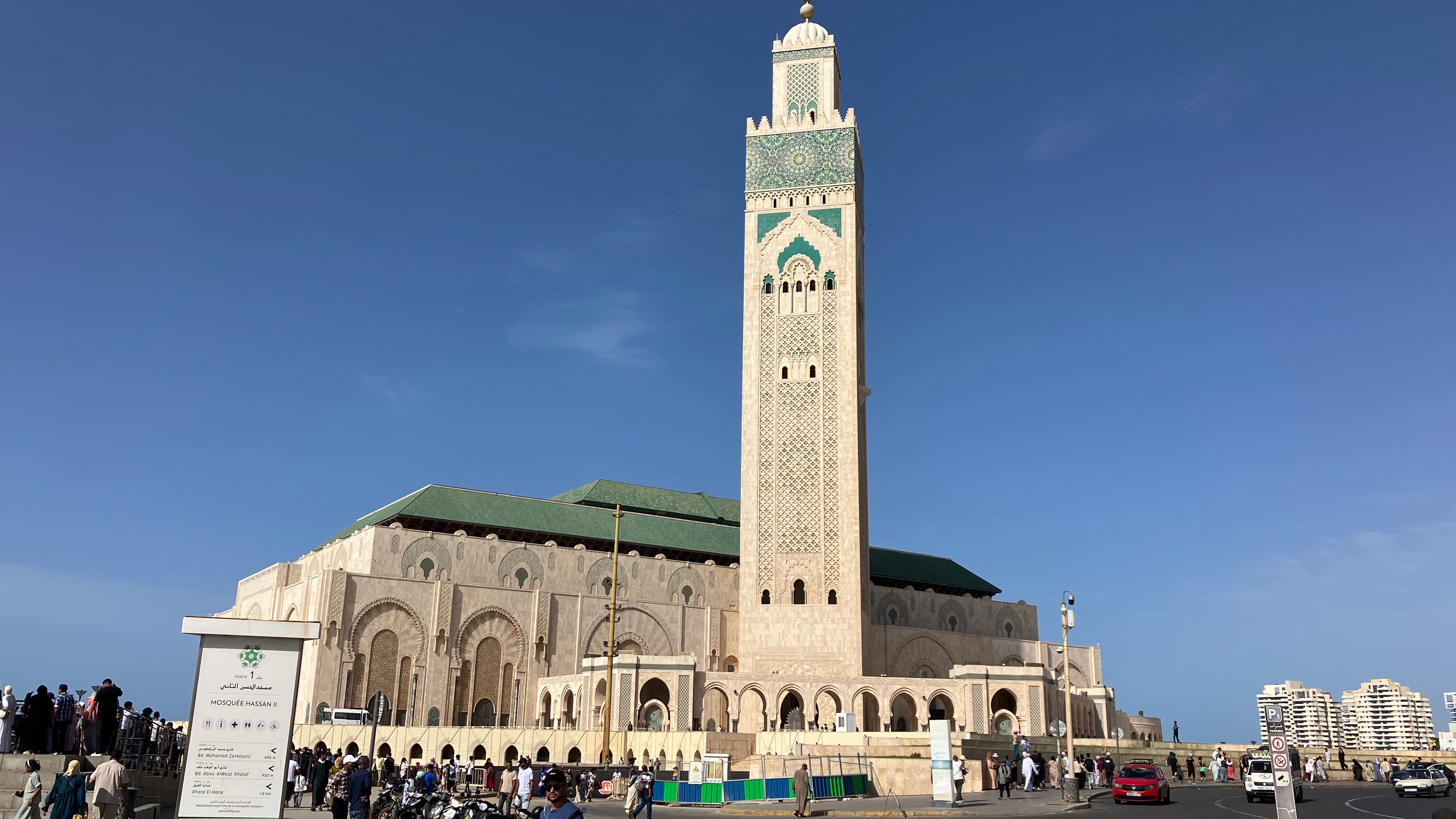
Arrival in Casablanca
With twelve more days ahead of you, the first afternoon in Casablanca is kept simple and unhurried: pick-up at Mohammed V Airport, then a walk to the Hassan II Mosque, whose minaret is the tallest religious structure in the world and whose grounds are open to non-Muslim visitors on guided tours, one of the few mosques in the country where that's the case. A stop at Mohammed V Square and a walk along the Corniche fill the rest of the afternoon before an early dinner — tomorrow's drive up the coast toward Assilah is a long one. Overnight in a Casablanca hotel.
Day 2
Casablanca to Assilah via Rabat
Head north to Morocco's political capital, Rabat, for the unfinished Hassan Tower and its rows of stone columns, the neighboring Mausoleum of Mohammed V, and a walk through the whitewashed Kasbah of the Oudayas above where the Bou Regreg river reaches the Atlantic. From there, the coast road continues to Assilah, a small fortified fishing town whose walls are repainted with new murals every summer for an international arts festival that's turned the whole medina into something like an open-air gallery. Settle in for the night.
Day 3
Assilah to Chefchaouen via Tangier
A morning in Tangier, a city shaped by decades as an international free port before independence, with stops at Cape Spartel — the headland where the Atlantic and Mediterranean meet — and the Cave of Hercules, a sea cave whose main opening is famously shaped like a map of Africa. In the afternoon, head inland and climb into the Rif Mountains toward Chefchaouen, arriving as the light turns golden over its blue rooftops.
Day 4
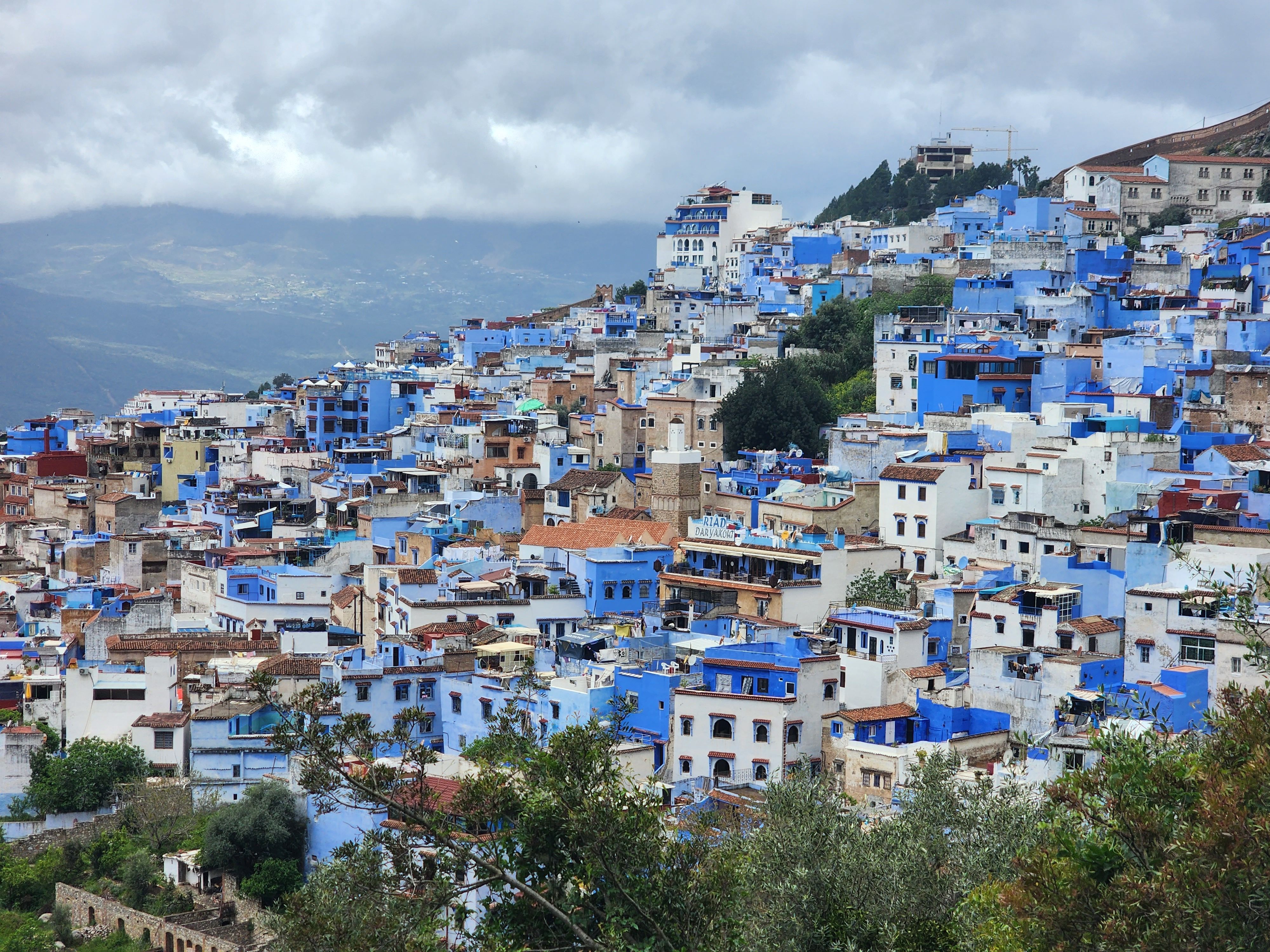
Chefchaouen Sightseeing
Chefchaouen was founded in 1471 as a fortress town, later becoming a refuge for Muslim and Jewish families fleeing the Spanish Reconquista — one of several theories for why its walls are painted blue in the first place. With no fixed schedule today, there's time to wander the lower medina's lanes and the quieter streets higher up the hillside, or make the roughly 45-minute hike to the old Spanish mosque, built during the colonial era but never actually used for prayer, for a wide view back over the town.
Day 5
Chefchaouen to Fes via Volubilis and Meknes
Leaving the Rif Mountains behind, the road drops back down onto open plains on the way to Volubilis, where standing columns and surprisingly intact mosaic floors are what's left of a Roman provincial capital abandoned well over a thousand years ago. Meknes follows, with the monumental Bab Mansour gate and the royal stables Sultan Moulay Ismail built to project the same imperial ambition as his contemporaries in Versailles. The day ends in Fes, with time to check into your riad before dinner in the medina.
Day 6
Fes Medina
This is the trip's second full day dedicated to a single medina, after Chefchaouen, and Fes el-Bali is a different kind of dense — bigger, louder, and built for trade rather than tranquility. A guide keeps the day moving efficiently between the Royal Palace gate, the historic Mellah quarter, the Al Quaraouiyine mosque and university complex, and the Chouara tanneries, where the smell reaches you well before the view does.
Day 7
Fes to Merzouga via the Middle Atlas
Having already crossed the Rif Mountains earlier in the trip, today's climb into the Middle Atlas around Ifrane feels familiar but distinct — different rock, different forest, and a real chance of spotting Barbary macaques in the cedars around Azrou, an endangered species that exists almost nowhere else in the wild. Midelt's mineral shops (the region produces much of Morocco's amethyst and quartz) make a good stretch-the-legs stop before the Ziz Valley's palm groves lead into Merzouga, where a camel carries you into the Erg Chebbi dunes as the sun sets.
Day 8
Merzouga Exploration
After sunrise over the dunes and breakfast at camp, today trades the vehicle's usual long-distance driving for a shorter 4x4 loop around the Merzouga area. A stop with a nomadic Berber family offers a glimpse of a lifestyle increasingly rare even in this part of Morocco, while Khamlia's Gnaoua musicians — descendants of communities that arrived via historic trans-Saharan trade routes — perform music once used in spiritual healing ceremonies. A nearby seasonal lake sometimes draws flamingos when recent rains have been generous.
Day 9
Merzouga to the Dades Valley
Rissani, the first stop leaving Merzouga, was once the effective capital of southeastern Morocco and still runs one of the region's most active weekly souks, drawing traders in from surrounding villages by truck and mule alike. In Erfoud, small workshops split open rock containing fossilized marine life and polish the cross-sections into tabletops and basins. The road then climbs into the Todra Gorge, its sheer walls rising several hundred meters overhead, before an overnight stop in the Dades Valley.
Day 10
Dades Valley to Marrakech
The road west passes through the Rose Valley, where the local rose harvest each spring supplies much of Morocco's rosewater industry, and Skoura's oasis of date palms, once the last reliable water source before caravans struck out across open desert. A stop in Ouarzazate takes in its film studios — a genuinely large employer in a town that would otherwise rely almost entirely on tourism — before Ait Ben Haddou's fortified ksar and the long climb over the Tizi n'Tichka pass into Marrakech.
Day 11
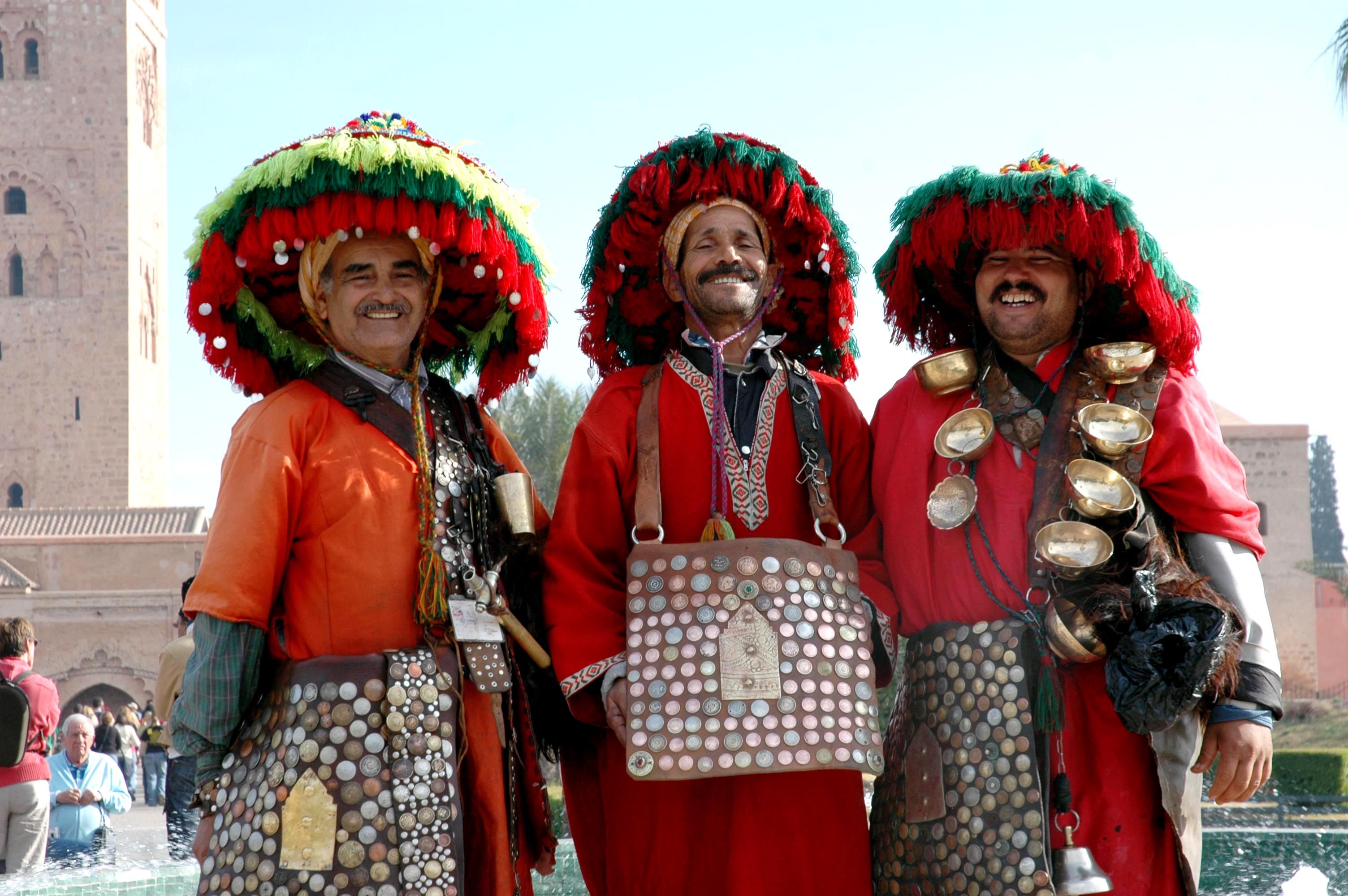
Marrakech Medina Tour
By this point in the trip you've seen several of Morocco's great medinas, and Marrakech's is the most commercially intense of them — the Bahia Palace's carved ceilings and quiet courtyards give way almost immediately to the noise of the souks once you step back outside its gates. The Ben Youssef Madrasa and the Koutoubia Mosque's gardens offer calmer counterpoints before Jemaa el-Fnaa, where the day ends as performers and food vendors take over the square at dusk.
Day 12
Marrakech to Essaouira
Essaouira has a reputation as one of the windiest towns on the Moroccan coast, which is exactly why it's become a windsurfing and kitesurfing destination in its own right rather than just a day-trip stop. On the roughly three-hour drive there, a stop at an argan oil cooperative shows the hand-cracking and pressing process behind the oil, produced almost nowhere else in the world. By early afternoon, the fortified medina and its blue fishing boats come into view, leaving the rest of the day for the ramparts and a seafood dinner by the port.
Day 13
Essaouira to Casablanca
After thirteen days covering nearly every region on the mainland, the final leg back to Casablanca is intentionally uneventful — a straightforward coastal drive with no scheduled stops, timed to reach Mohammed V Airport with comfortable time to spare rather than cutting your last day close.