Day 1
Arrival in Casablanca
Meet your driver at Mohammed V Airport and begin with a half-day tour of Casablanca rather than a straight transfer out of the city. At just over 200 meters, the Hassan II Mosque's minaret holds the record as the tallest religious structure in the world, and its prayer hall extends out over the Atlantic on a purpose-built platform. Round out the afternoon with a walk through Mohammed V Square, laid out by French colonial planners and still ringed by their government buildings, before an evening stretch along the Corniche. Overnight in a Casablanca hotel.
Day 2
Casablanca to Chefchaouen via Rabat
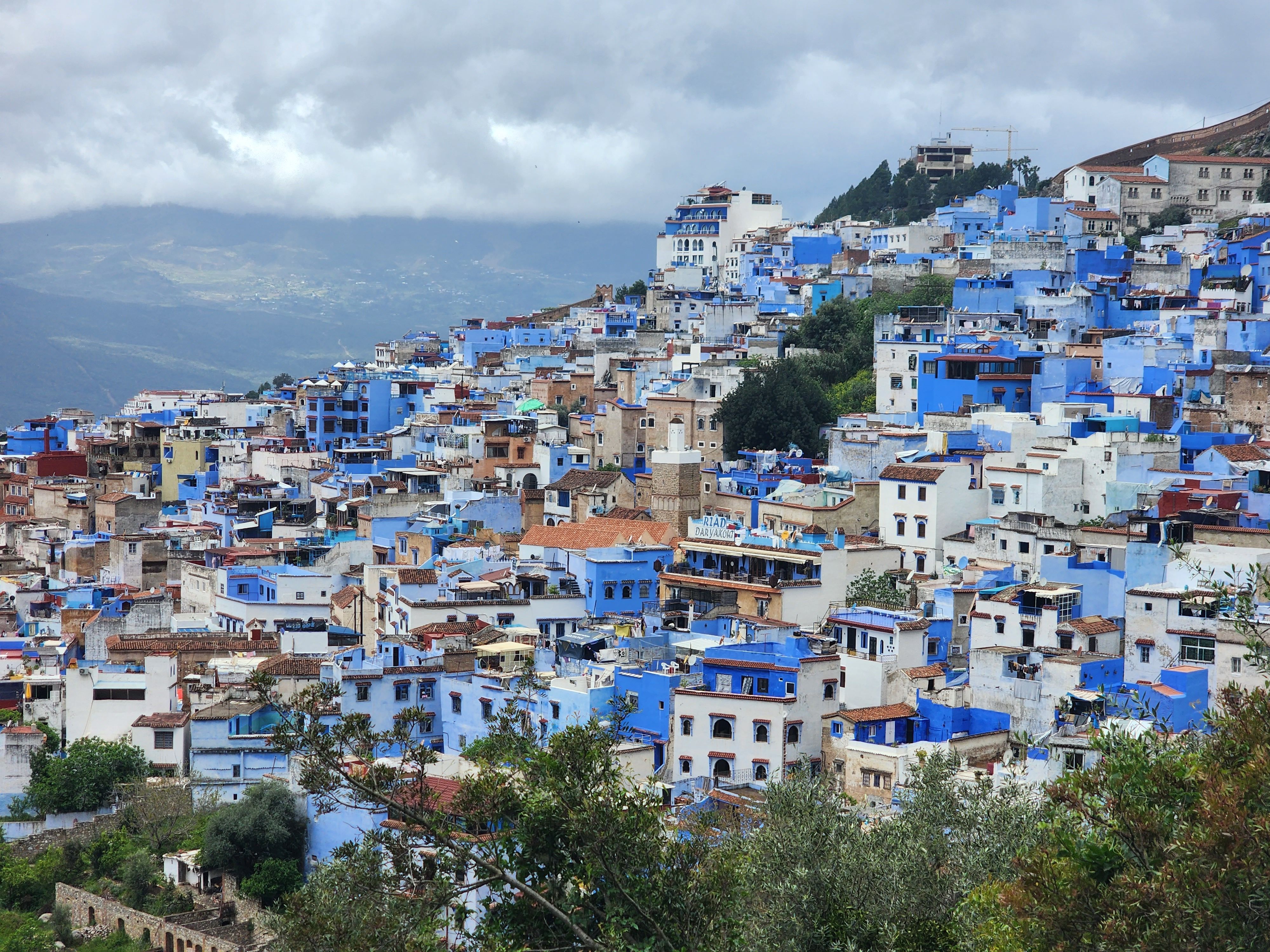
Head north to Rabat, capital of the Almohad dynasty that first attempted the Hassan Tower in the 12th century before losing the resources — and eventually the ambition — to finish it, leaving today's rows of stone columns as the visible result. Next door, the Mausoleum of Mohammed V is watched over by mounted royal guard in ceremonial dress. From there the road climbs steadily into the Rif Mountains, and Chefchaouen's blue rooftops come into view against the hillside by early evening.
Day 3
Chefchaouen Sightseeing
A full day to properly explore Chefchaouen on foot, from the lower medina's blue-washed lanes and small artisan shops to the quieter upper streets where fewer visitors wander. Most guests spend part of the day on the optional hike up to the old Spanish mosque, roughly 45 minutes each way, which looks back down over the entire town and the surrounding Rif hillsides — one of the better photo spots on the whole trip.
Day 4
Chefchaouen to Fes via Volubilis and Meknes
Today's route traces a rough timeline of Moroccan history in reverse: from Volubilis, a Roman provincial capital abandoned by the 11th century, to Meknes, built up as an imperial capital some six centuries later by Sultan Moulay Ismail, whose royal stables once housed thousands of horses behind walls that still stand largely intact. The Bab Mansour gate marks the entrance to what remains of his palace complex. From there, it's a short final stretch into Fes, arriving in the evening with time to settle into your riad.
Day 5
Fes Medina
The Al Quaraouiyine mosque and university at the heart of today's walk predates Oxford by roughly four centuries and the University of Bologna, often cited as Europe's oldest, by more than two hundred years — a fact that tends to reframe how visitors think about Fes el-Bali's other landmarks. From there, a guide continues to the ornate Royal Palace gate, the historic Mellah quarter, and the open-air Chouara tanneries, where the dyeing process has barely changed since the medina was built.
Day 6
Fes to Merzouga via the Middle Atlas
Depart south into noticeably cooler air at Ifrane, a planned town whose sloped roofs and stone chalets were modeled on European ski towns rather than anything traditionally Moroccan. The cedar forest near Azrou is one of the best places in the country for a roadside sighting of the Barbary macaque, and Midelt's apple orchards mark the transition zone before the Ziz Valley's palm groves lead into increasingly Saharan scenery. In Merzouga, swap the vehicle for a camel and ride into the Erg Chebbi dunes as the light turns gold at sunset.
Day 7
Merzouga Exploration
A one-night stop at the dunes only shows part of what makes Merzouga distinct, so this day stays local with a 4x4 rather than moving on. After an optional sunrise climb and breakfast, visit a Berber family still living a semi-nomadic life at the desert's edge, typically over mint tea in their tent, then Khamlia, whose Gnaoua musicians descend from communities brought across the Sahara by historic trade routes and still perform the same trance-inducing rhythms today. A seasonal lake nearby occasionally hosts migrating flamingos when rainfall has been good.
Day 8
Merzouga to the Dades Valley
The drive out of Merzouga passes through Rissani, historically the main market town for the whole Tafilalt oasis region, and Erfoud, where the local fossil trade turns ancient marine rock — some of it predating land animals entirely — into polished furniture and décor. From there, the road climbs into the Todra Gorge, a canyon narrow enough in places to feel like driving through a crack in the rock, before an overnight stop in the Dades Valley.
Day 9
Dades Valley to Marrakech
West of the Dades Valley, the Rose Valley around Kelaat M'Gouna turns the local economy around a single crop each spring: damask roses, harvested by hand at dawn before the heat wilts them, then distilled into rosewater and cosmetic oils. Skoura's palm oasis and Ouarzazate's film-industry backlots follow, and a short stop at Ait Ben Haddou's earthen ksar precedes the day's final climb over the Tizi n'Tichka pass into Marrakech.
Day 10
Marrakech Medina Tour
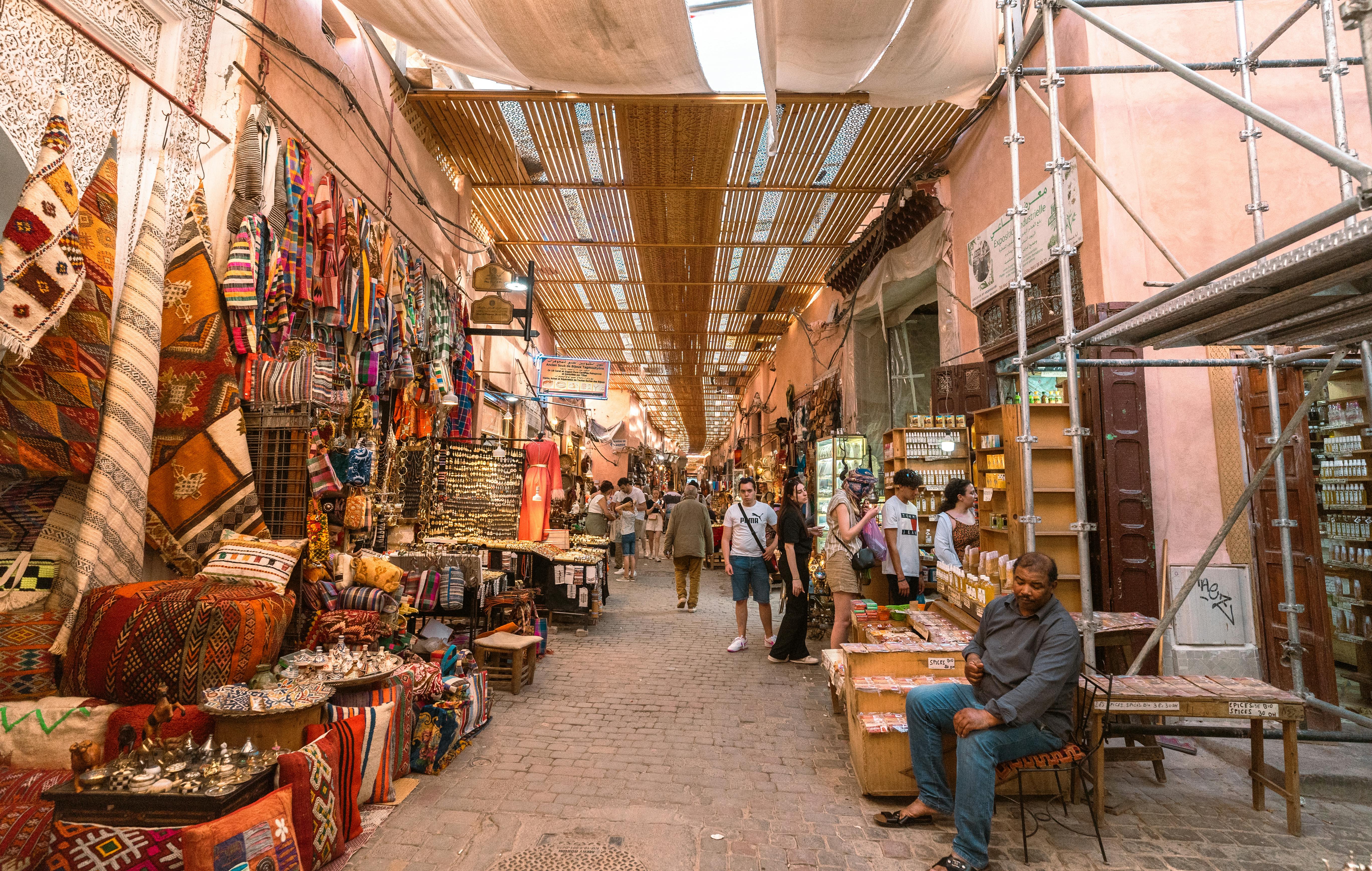
A full guided day in Marrakech, timed to reach the Bahia Palace's shaded courtyards before the midday heat and crowds both peak. From there, the Ben Youssef Madrasa's carved cedar and stucco interior — a rare surviving example of Saadian-era religious architecture — leads into the souks, where the spice quarter alone can take twenty minutes just to walk through. The Koutoubia Mosque's gardens offer a break before Jemaa el-Fnaa fills with storytellers, musicians, and food stalls at dusk.
Day 11
Marrakech to Essaouira
The drive west, roughly three hours, usually includes a stop at a women's argan oil cooperative, where the nuts are still cracked and pressed by hand in a process unique to this part of Morocco — look out, too, for goats climbing the argan trees themselves along the roadside, a genuine local sight rather than a staged one. Essaouira's fortified medina comes into view by early afternoon, its 18th-century sea walls and cannons still facing the Atlantic, leaving the rest of the day for the ramparts, the fishing port, and a seafood dinner by the harbor.
Day 12
Essaouira to Casablanca
The last day retraces the coast road back to Casablanca, deliberately free of scheduled stops so twelve days of near-constant sightseeing end on a quiet note rather than one more packed itinerary. We build in enough buffer before Mohammed V Airport that a delayed start or a last coffee in Essaouira won't put your flight at risk.