Fes is Morocco’s oldest imperial city and, for many visitors, its most atmospheric. Fes el-Bali, the walled old city founded in the 9th century, is believed to be the largest car-free urban area in the world: a dense maze of narrow lanes where goods still move by handcart and pack animal, and where tanning, weaving and metalworking are carried out much as they have been for centuries.
The Chouara Tannery, with its grid of stone dye pits, is the most photographed sight in the Medina, but Fes’s historical weight comes from institutions like the University of al-Qarawiyyin — founded in 859 CE and recognized by UNESCO and Guinness World Records as the oldest continuously operating academic institution in the world — and the intricately carved Bou Inania Madrasa. The Mellah, the former Jewish quarter, adds another layer to the city’s history.
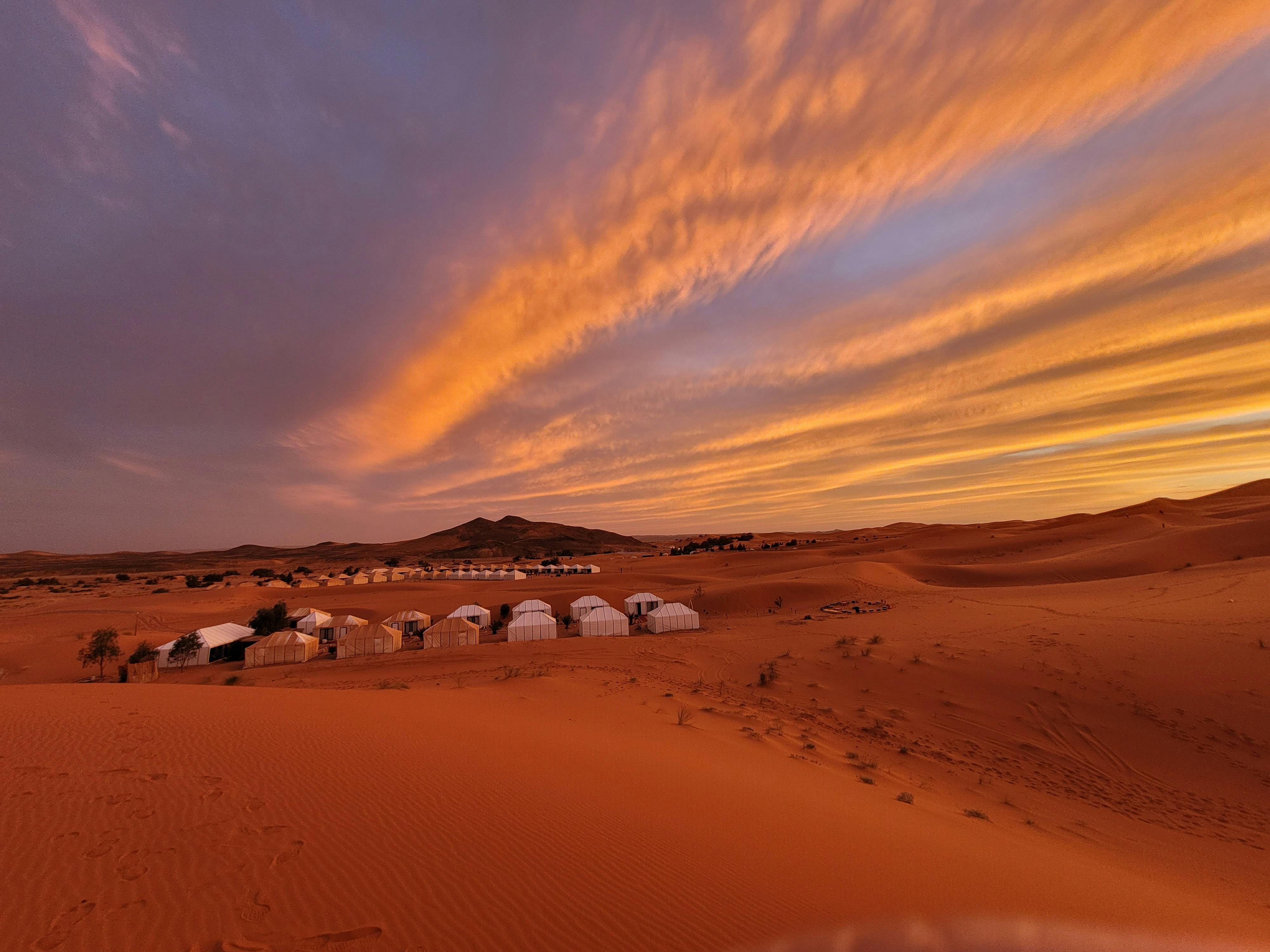
Fes works well both as a standalone city visit and as a starting point for two very different routes: north to the blue-washed town of Chefchaouen, or east across the Middle Atlas toward the Ziz Valley and Merzouga for a Sahara Desert tour. Travelers connecting Fes to Marrakech usually do so either by the direct road through the Middle Atlas or as part of a longer loop that includes the desert.