Marrakech is Morocco’s most visited city and, for most travelers, the starting point for the rest of the country. The walled Medina — a UNESCO World Heritage site — is built around Jemaa el-Fnaa, a square that functions as market, food court and open-air stage from midday until well after dark. Around it, a dense network of souks sells leather goods, woven textiles, spices, ceramics and metalwork, much of it still made by hand in workshops just off the main lanes.
Beyond the square, Marrakech’s main sights are spread across a walkable Medina and the newer Guéliz district to the west. The 12th-century Koutoubia Mosque, the Bahia Palace, the Saadian Tombs and the Ben Youssef Madrasa cover several centuries of the city’s history, while Jardin Majorelle and the Yves Saint Laurent Museum represent its more recent role as a design and fashion reference point.
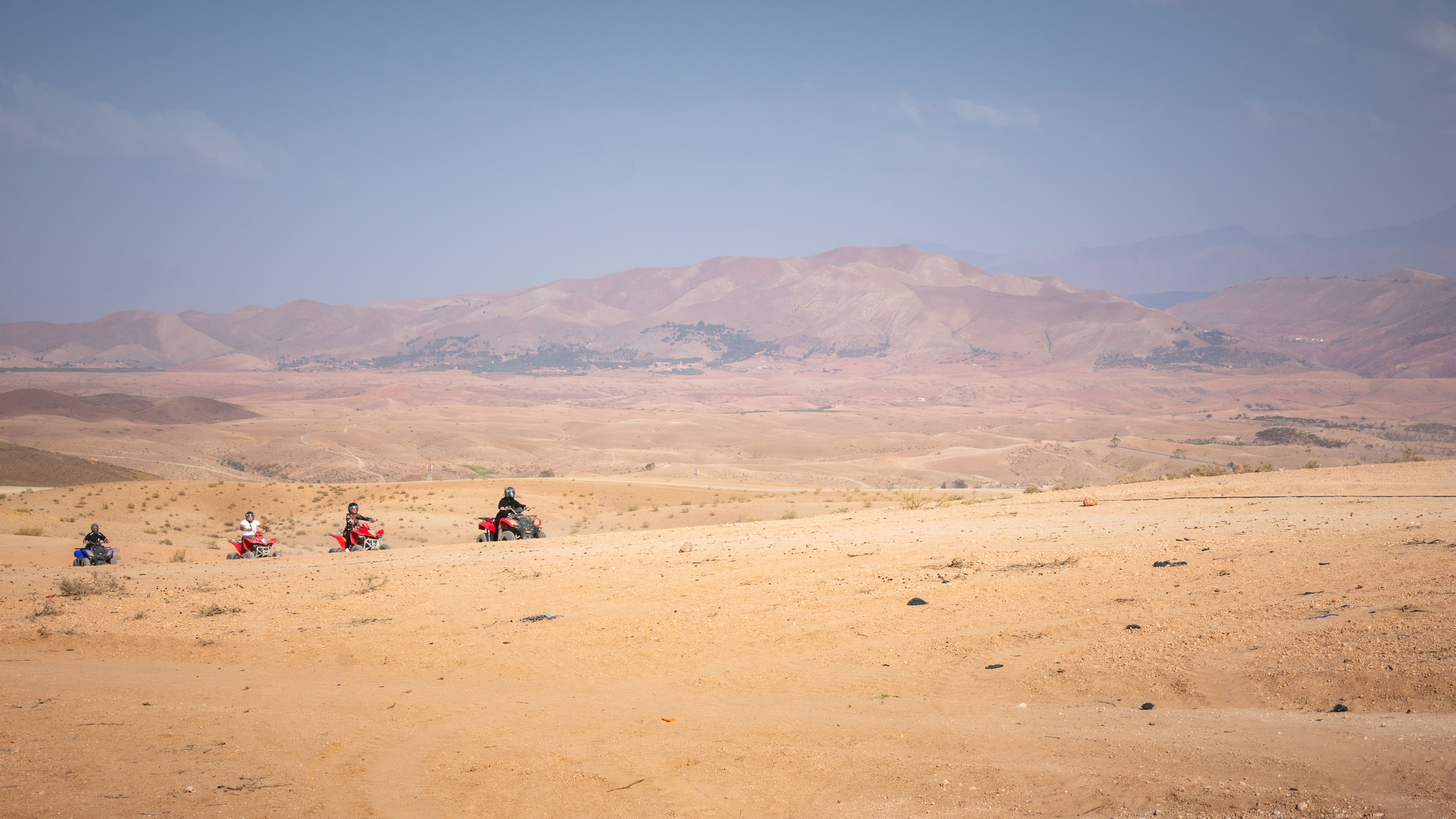
Marrakech is also the logistical hub for reaching the rest of southern Morocco. The road east through the High Atlas via the Tizi n’Tichka pass connects the city to Ouarzazate, Ait Ben Haddou and, eventually, Merzouga and the Erg Chebbi dunes — the route followed by most private multi-day desert tours. Closer to the city, the Atlas foothills, the Ourika Valley and the Agafay Desert are all reachable on a single day trip, which is why many travelers split their time between exploring the Medina and taking short excursions out of it.